Category: Book Reviews

  • Book RE_review: The 21 Irrefutable Laws of Leadership

    The 21 Irrefutable Laws of LeadershipWhy a RE_review?

    WHAT IS A  RE_review?

    Simply, it’s a chance for me to put in writing my habit of proactively pursuing a life long passion of developing as a leader.  Since leaders are learners, and learners are readers, I have made it a practice of mine to always having the bible in one hand and a leadership book in the other.

    Tonight I finished my regular reading of John Maxwell’s The 21 Irrefutable Laws of Leadership.  Over the years I’ve gained so much insight from this book, but each time I read it, I am either enlightened to some principal of leadership that I must have overlooked the last time I read it, or I am encouraged in the areas I’ve succeeded as well as failed.  Because both success AND failure is the fertile ground for learning, I appreciate the times I take to stop and have moments of self evaluation based on the values and principals I’ve set for myself.

    So what tidbits of truth did I find myself uncovering or rediscovering?  Let me share a few:

    • Concerning the Leader vs the Entrepreneur: “People may be buying what he (an Entrepreneur) ha to sell, but they’re not following him.  At best, he is able to persuade people for a moment, but he holds no long-term influence with them.”  From this quote, I realized why Pastor who say discipleship is like sales always rubbed me the wrong way.
    • Champions don’t become champions in the ring – they are merely recognized there.
    • Major barriers to successful planning are fear of change, ignorance, uncertainty about the future, and lack of imagination.
    • …the deeper the relationships (with others), the stronger the potential for leadership.
    • Build enough of the right kinds of relationships with the right people, and you can become the real leader in an organization.
    • …people listen to what someone has to say not necessarily because of the truth being communicated in the message, but because of their respect for the speaker.
    • How do people react when you communicate?  When you speak, do people listen – I mean really listen? Or do they wait to hear what someone else has to say before they act?
    • Truth is the foundation of leadership.  To build trust, a leader must exemplify these qualities: competence, connection, and character.
    • If people don’t know what to expect from you as a leader, at some point they won’t look to you for leadership.
    • …who you get (to follow you) is not determined by what you want. It’s determined by who you are.
    • (the quality of leaders around you) does not ultimately depend on a hiring process, a human resource department, or even what you consider to be the quality of your area’s applicant pool.  It depends on you.  Who you are is who you attract.
    • Effective leaders know that you first have to touch people’s hearts before you ask them for a hand.
    • You don’t get credit for being “right.” Your success is measured by your ability to actually take the people where they need to go.
    • Great leaders recognize that when to lead is as important as what to do and where to go.
    • Reading a situation and knowing what to do are not enough to make you succeed in leadership.  Only the right action at the right time will bring success.  Anything else exacts a high price.
    • Success in not measured by what you are leaving to, but by what you are leaving behind.
    • You will be judged by how well your people and your organization did after you were gone.

    Good stuff =)

    Now it’s time to rip myself apart and be honest with where I need more growth.

  • Book Review: Put Your Dream to the Test by John Maxwell

    In John Maxwell’s newest book, Put Your Dream to the Test:10 Questions to help you see is and seize it, John tries to tackle the many questions about having life dreams/aspirations/goals and the path to pursue and hopefully achieve them.

    I’ll admit, the initial impression of what I thought the premise of this book would be didn’t really appeal to me from just a judgment of the cover.  I’m not one for your “self-help” pick-me-uppers ,which is what I thought this book was going to be about.  But as I began to read I was more than pleasantly surprised.

    As I read this book, I began to realize that the word “Dream” here can be replaced with what I would describe as “Calling.”  My calling is directly affected by my relationship with Christ because I have committed to being someone who “Delights in the Lord“, allowing Him to give me the “Desires of my Heart.”  It may just be a matter of semantics, but it made all the difference to me.

    Personally, this book touches specifically on just a part of the spectrum good leadership (which is my favorite subject of study at the current moment) or what Covey would call a “Highly Effective Person.”  The idea of a dream is what drives the human nature.  Some “experts” of personal development call it “seeing with the end in mind”.  In the Christian world, it has even been called in a round-about way, “Holy Discontent.”  In normal circumstances this book might have been a snoozer for me, but at this particular juncture in life, evaluating my “Dream” is exactly what I needed – and this book had a lot to offer.

    Here are just a few quotes:

    • …a dream is an inspiring picture of the future that energizes your mind, will, and emotions, empowering you to do everything you can to achieve it.
    • Failure is the price we must pay to achieve success.
    • Followers don’t give their best to something they don’t understand.
    • Yes, we do need to aim high.  However, we don’t have the ability to attain whatever we seek.  I don’t possess the ability to achieve every potential I can imagine. I don’t believe that I can achieve any goal. That is not reality.
    • …you have to take a realistic look at yourself to know where your habits are taking you.
    • …complacency kills passion.  It reduces us to average.
    • It is impossible for me to ignore the reality of my present position and be successful.
    • Successful people think differently from unsuccessful people, especially in the area of failure.  They see it as a regular part of success, and they get over it.
    • The great men and women of history were not great because of what they earned and owned.  They were great because they gave themselves to people and causes that lived beyond them.

    I really needed this book at this time in my life, and I was glad to have read it and gained some insightful wisdom on how to approach the journey of going after my “Dream.”

    Got dreams?

  • Book Review: The American Patriot’s Almanac

    When I received my first book as Thomas Nelson book review blogger, I was excited. What I received in the mail was The American Patriot’s Almanac: Daily Readings on America.

    The first thing I noticed was that this book was really well made. It has a sturdy Red cloth binding and the artwork on the front was embossed. I thought to myself, “This would make an amazing coffee table book!”

    As a person who loves American history (mostly in part because my Filipino heritage is steeped in American patriotism, dating back to my ancestors who fought in World War II) I was looking forward to opening this book. Once I began reading I saw that this was more than just a conversational piece of a lavish version of Uncle John’s Bathroom Reader.

    The introduction alone will leave you feeling a sense of Patriotism that drove our forefathers to their resolves to make America the “Land of the Free and the Home of the Brave.” Now I know that these are probably biased feelings, so let me just give you a few reasons who I actually like this book (which I don’t have to say. Read this if you don’t believe me)

    • You say “I don’t like reading!” That’s ok. This is sectioned out so you have a simple one page per day reading. It’s like a daily devotional for the history buff.
    • Even though the book is published by a company that publishes many “Christian” titles, this does not skew itself in that way. Any reference to Christianity is simply because it is a reference to the faith of our founding fathers. This makes it a great gift for anyone.
    • For the History buff, this thing is packed with unabridged documents like the Constitution, Bill of Rights, and Emancipation Proclamation.

    Did I mention the cool red cloth binding with gold letters? Go ahead and pick this one up for you or a history buff friend. Thank me later.

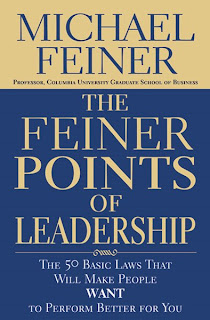
  • Book Review: The Feiner Points of Leadership

    If there is one book I could say would most practically help every Pastor, both lead and associate, function in a healthy way, this would be it. I’ll be honest and say that if I knew what I have just read in this book before going into the “workforce”, I wouldn’t have had to learn most of these principles “The Hard Way.” Notice I didn’t say “ministry”. Why? Because this book isn’t written to Guys in ministry. It was written to people out in the secular workforce. But…all the “Feiner Points” apply to healthy, functioning leadership because Pastoring/Ministering is leadership.

    The subtitle of this book is, “The 50 Basic Laws That Will Make People WANT to Perform Better for You” but this book is so much more than that. When picking up the book, you can feel like this is going to be ANOTHER book on leadership. I’ve read tons of those, and while I was excited to read this book because of another pastor who said he liked it, I was a little skeptical of what this was going to bring new to the table.

    “The Feiner Points…” is more than a typical leadership book. It’s a book about “follow-ship”. Not many of us are or will be the CEO or “Top Executive in our field, but almost all of us are subordinates. This book is great for giving practical principles for success as a leader who is subordinate to someone else.

    Here are some of my favorite quotes:

    • Leadership can never be something practiced by an individual in isolation.
    • …leadership is like an iceberg: Ninety percent of it is hidden below the surface
    • …every High-Performance Leader…had both strong management and strong leadership skills
    • …an imbalance between leadership and management can lead to problems not just for individuals, but also for an entire organization
    • To lead your people, you must know your people (The Law of Intimacy)
    • The Law of Intimacy does not mean you need to become friends with your subordinates, or that you need to socialize with them outside of work. You do not and you should not…knowing your people stops short of befriending them.
    • If a leader wants a subordinate to be committed to the succeess of the leader and the leader’s organization, then the leader must be committed to the subordinate – to his or her growth and development, and to what’s important to him or her both inside and outside the office.
    • (The Law of Feedback) It means telling a subordinate what he or she needs to do more of, needs to do less of, or needs to do differently to improve performance.
    • Bosses should encourage feedback from their subordinates, who will often have a much better idea of their boss’s effectiveness than the boss will.
    • To be effective, feedback must be camera-lense: he leader should indicate the specifics of what he or she observed that led to his or her judgement of the subordinate’s performance.
    • (In relationship to bosses) Respect the office even if you don’t respect who sits in it.
    • You must preserve your self-esteem and integrity by knowing how to push back, by knowing how to tell the Emperor that he or she is wearing no clothes…the hardest concept to get people to acept is that, as a leader, they’re obligated to tell bosses when they’re naked (not doing things right)
    • You should never apologize for leading a group of your peers.
    • Each meeting nees an agenda….the team must own the agenda for the meeting, which means not that the leader tells them that they own it, but that everyone has a role of shaping it.
    • If you’re having a problem with a colleague…you must assume you’re the cause and you’re the source
    • People look to a leader’s substance, not style, to validate their leadership value.
    • High-Performance Leaders…seek to create healthy conflict…

    Ok, there is so much more I could write, but you have to check out this book for yourself. If you buy it and don’t like it, send it to me. I’ll find someone who could benefit from it!

  • Book Review: Made to Stick

    When I saw here that Andy Stanley made his staff read this book and then covered it in a meeting, I thought that it would be something that I may benefit from. So I read it, and I’m glad I did.

    The basic idea of this book was to find out what were the similarities among ideas that “stuck”, or was able to leave the people it was communicating to an unavoidable memory of it. They analyzed tons of ideas and placed it in book format. Here are a couple of quotes that I got from the book:

    • We need to create ideas that are simple and profound
    • What we mean by simple is finding the core of the idea
    • The hard part is weeding out ideas that may be really important but jut aren’t the most important
    • Concrete language helps people, especially novices, understand new concepts. Abstraction is the luxury of the expert. If you’ve got to teach an idea to a room full of people, and you aren’t certain what they know, concreteness is the only safe language.
    • Vivid details boosts credibility
    • The story’s power, then, is twofold: It provides simulation (knowledge about how to act) and inspiration (motivation to act).
    • Once we know something, we find it hard to imagine what it was like not to know it
    • …visualizations focus on the events themselves – the process, rather than the outcomes. No on has ever been cured of a phobia by imagining how happy they’ll be when it’s gone.

    This was the book I was looking for when it came to the subject of effective communication. There were lot a great principle that I see can benefit not just my professional life, but my personal life as well. I will admit that I need to read through it one more time, because it can become a “long read.” Just reading back at the things I’ve highlighted tells me that I took too much time reading the book, but I am looking forward to it and not dreading it.

  • Book Review: Unchristian

    Since I got this book from Baker Publishing, I’ve been excited to put up a review on it. The title of the book, Unchristian, can be a little misleading if you don’t read the subtitle. In short, this book is about how a specific generation (defined as mosaics: 16-29 yr olds) thinks about modern American Christianity and it’s followers.

    I will admit, I am always skeptical of this type of research because even if you surveyed 1 Million people, you still not surveying everyone. Also, if you did this type of research for a project in H.S. or college, you and I both know how data can be manipulated to prove a predetermined theory.

    With that said, you have to chose to either take this book as an honest attempt to understand how followers of Christ are portraying Christianity, or you can choose to be looking at this book as another ways to say that you know everything and no one can tell you anything you don’t know.

    In their research, they basically came up with 6 basic themes that came up with the people who were surveyed, concerning Christianity and it’s followers in America.

    1. They are Hypocritical
    2. Too focused on getting converts. They feel like targets instead of people who that are actually cared about.
    3. We are Anti-Homosexual. We are bigoted to homosexual people and their lifestyles
    4. We are Sheltered
    5. Too Political
    6. Judgemental

    After reading this book, I was both saddened by how we have managed to look so little like Christ as a church “universal”, but also determined to to my part as a pastor to equip and empower followers of Christ with a biblical-worldview that will help them change the course of where the church has been going.

    With studies like Reveal, and this book, we are seeing that discipleship is essential if we as a church are going to succeed in effectively representing Christ. I recommend that any pastor who desires to have an effective ministry past the next 5 years pick up this book.

    Before I go, here are some quotes that I picked up from the book:

    • Mosaics and busters are the ultimate “conversation generations.” Then want to discuss debate. and question everything.
    • …we cannot simply dismiss the criticism of hypocrisy by saying “Christians are not perfect; they are just sinner just like anyone else.”
    • One-third of the people who qualify as born-again Christians embrace this idea (that “avoiding sin” is the main goal of being a Christian)
    • We rationalize that outsiders don’t want to become Christ followers because they can’t cut it. The truth is that few outsiders say they avoid Christianity because the moral standards are too restrictive.
    • Older born-agains need to look ore carefully at what Jesus teaches, that spiritual maturity is demonstrated in a life as an outcome of the condition of a person’s heart and soul, that behaviors follow belief.
    • …younger born-again Christians need to take an honest assessment of their lives and realize that they are increasingly poor witnesses of a life and mind transformed by their faith.
    • We cannot hope to shed our hypocritical label if our lifestyles offer no proof of the “fruit” of Christ-likeness.
    • Rather than being genuinely interested in people for their friendship, we often seem like spiritual headhunters
    • …we heard no favorable comments about street witnessing, where Christians intercept unknown passers-by to share the Good News.
    • We are learning that one of the primary reasons that ministry to teenagers fails to produce a lasting faith is because they are not being taught to think.
    • We do not look like Jesus to outsiders because we do not love outsiders like Jesus does.
    • It is unChristian to lose your sense that every one’s fallen nature affects all aspects of his or her life, including sexuality, and to forget God’s command to love people in order to point them to Christ.
    • Another reason sheltered faith is unappealing is that young adults resist simplistic answers. Mosaics and Busters relish mystery, uncertainty, and ambiguity. They are not bothered by contradiction or incongruities.
    • …our choices to live a sheltered life often leaves us unable or unwilling to help people who need Jesus.
    • If we allow the actions and attitudes of outsiders to shock us, we become either isolationists or crusaders, and neither extreme will have much influence on outsiders.
    • Keep in mind that politics only gets you,so far. You change people’s lives most deeply by transforming their hearts, by helping them embrace a passionate, thoughtful, personal connection to Jesus.
  • Book Review: The Elements of Preaching

    A Book Review
    The Elements of Preaching: The Art of Biblical Preaching – Clearly and Simply Presented.
    By: Warren and David Wiersbe

    I first heard about this book in a sermon from a Calvary Chapel Senior Pastor’s conference CD that my pastor let me borrow. I can’t remember who the teacher was (I think it was Skip Heitzig of Calvary of Albuquerque…which by the way is a Calvary Chapel. So is Harvest Christian Fellowship, Horizon Christian Fellowship, and Applegate Christian Fellowship.)

    This book was referenced so much during the presentation on preaching, that I had to put it on my wish list. When I received it for my birthday, I was excited to dive in. It’s only a little over 100 pages and it took me about an hour to read it. So if you have trouble reading long books, this is a perfect book for you. Here’s some good nuggets of info that I got from the book.

    • Have a specific aim for each message and be sure to tell your congregation what it is
    • It is an unpardonable sin to develop and outline and then force it upon a passage of scripture
    • Check every reference before you finalize your outline.
    • Good preachers own wastebaskets and use them. They realize not every choice idea can be worked into the message, lest the sermon become a monstrosity.
    • You do not refer to matters you would like to discuss if you had the time. That just wastes more time!
    • To paraphrase the words of the text is not the same as preaching the truths on the words.
    • Plan your preaching (i.e. have a preaching calendar)
    • All preachers say just about the same thing, if their preaching is at all biblical; but some say things in more interesting ways
    • Negative preaching…can border legalism.
    • In regards to personal study “…Don’t settle only for writers who agree with you; read some that disagree with you. They may teach you more.”
    • Don’t carry your personal complaints into the pulpit to make them a port of the sermon
    • Preach to express, not to impress.

    Ok…I’m done. This book is seriously chalk full of quotable lines that it’s not funny. If you are just starting out as a preacher or teacher of God’s Word, you need to pick this up. If you have been doing it for a while and feel like you’re “pretty good”, pick this up – you may find that your strengths have been covering the mistakes you’ve been making as a preacher. If your desire is to become an effective preacher of the Word of God, then I totally recommend reading this book.

  • Book Review: Good to Great

    And so the beginning of my arduous adventure into tackling the plethera of books I received for my birthday. Thanks Mom and Dad Beron. I started with Jim Collin’s book entitles “Good to Great: Why Some Companies Make the Leap… and Others Don’t” I’ve seen it on the shelves and hear a lot about it, being touted as a #1 best seller. Being that leadership and such has been a subject of study that interests me immensly, I decided to place this book on my list of, “Must Reads” This 300 page book (of which 100 pages includes an extensive appendix and notes) was a really good read. I’m no fortune 500 company owner, but I was intrigued to find that the principles which governed success for great companies are the principles that govern successful lives. Here are a couple of quotes:

    • Few People attain great lives, in large part because it is just so easy to settle for a good life.
    • …the type of leadership required…self-effacing, quiet, reserved, even shy – these leaders are a paradoxical blend of personal humility and professional will.
    • You can accomplish anything in life, provided that you do not mind who gets the credit – Harry S. Truman
    • Level 5 leaders are fanatically driven, infected with an incurable need to produce results.
    • Level 5 leaders set up their successors for even greater success in the next generation, whereas egocentric Level 4 leaders often set up their successors for failure.
    • The good-to-great leaders began the transformation by first getting the right people on the bus (and the wrong people off the bus) and then figured out where to drive it.
    • Concerning people decisions:
      1. When in doubt, don’t hire – keep looking.
      2. When you know you need to make a people chance, act.
      3. Put your best people on your biggest opportunities, not your biggest problems.
    • Charisma can be as much a liability as an asset, as the strength of your leadership personality can deter people from bringing you the brutal facts.
    • Spending time and energy trying to “motivate” people is a waste of time…if you have the right people, they will be self-motivated.
    • The transition (from good to great) begins not by trying to discipline the wrong people into the right behaviors, but by getting self-disciplined people on the bus in the first place.
    • “Anything that does not fit out Hedgehog Concept, we will not do.”

    In short, I feel that a lot of the principles that Covey brought to us in “7 Habits…” were wonderfully purported in this scientific analysis of what made companies leap and others not. I know that there were a lot of things I read that I am chewing on…things that I wonder would affect my ministry, my pool business, my life. It’s a fun read and it would be a great addition to your library of great leadership books. It’s also just a really great informational book with tons of history and revealing interviews.

  • Book Review: The Top Ten Mistakes Leaders Make

    Today I “threw down” on a book that was given to me last night by one of the members of our church. He noticed that I was on a Leadership Book kick and tossed me a book that impacted him in the arena of his “secular profession.” I have read MANY leadership books, and I make it a habit to continually do so, because leaders are learners and learners are readers. With that said, I’ve read many leadership books that I like and dislike, but then every once in a while a I’ll find a book that nails me right between the eyes. This book was one of them.

    I’ll be honest, there were some things that I didn’t agree with theologically, but the author had a lot of great things to say about mistakes leaders make. As I read this book, I felt as though he was writing about me. The encouraging point is that this book is a definition of the author’s experience or personal observations of these mistakes. That’s why he says right from the beginning of the book (in fact it’s just the introduction) that,

    “Top-Flight leaders really aren’t born, they learn by trial and error.”

    Here are some other quotes worthy of mentioning from this book:

    • “There is nothing in my organization that anyone does that I should not be willing to do myself if it promotes the good of us all.”
    • “My job is to help those I lead release as much of their potential as possible. I do not do the work; others do it under my leadership…to equip them to do the work that must be done.”
    • “It is almost necessary to be a workaholic to make it as a Christian leader. Unfortunately, many leaders are poor listeners because of this very problem.
    • “Every person who aspires to be used by God in His service must have as a prime objective the same passion: to see people’s lives changed into Christ’s likeness.”
    • “It’s a big mistake to stifle your brightest stars with the harness of endless committees, procedures, and paperwork.”
    • Leaders should lead, not just implement consensus.”
    • “Very often, how a project is done doesn’t really matter. If it is done differently but accomplished effectively then the job gets done-which is all that matters.”
    • “I’d rather get ten men to do the job than to do the job of ten men. – D.L. Moody”
    • “Delegation means giving people the freedom to decide how jobs will be done.”
    • “As organizations grow…communication must be given more attention and must become more formal.”
    • “The higher you go in leadership, the more sensitive you have to be about everything you communicate.”
    • “The more people you lead, the more you must listen.”
    • “Disrespect for authority should not be tolerated in a Christian corporate culture.”
    • “If we hold to the standards of biblical Christianity, don’t we all believe the same way? The answer is a resounding no! Christians differ dramatically in both beliefs and values, and can best serve their Master if they yoke themselves with Christians in the body of Christ who see things in roughly the same way as they do.”
    • “If you are a leader, lead those who, as closely as possible, value and believe what you do.”
    • “Success without a successor is failure.”
    • “Growth comes from change.”
    • “I’m an eternal optimist…’expect great things, attempt great things.’ “

    There is so much in this book that I WILL be rereading it. I’ve learned so much about my personal weaknesses through this book. Readers beware…reading this book will be like looking into the “leader’s mirror…you’ll see yourself in previously unrevealed ways and learn what it takes to ‘get presentable’ for effective leadership for His glory.” (quote from Joseph M. Stowell, President of Moody Bible Institute concerning this book.)

    I totally recommend this book to anyone interested in guarding themselves from the top ten mistakes leaders make or preventing previous mistakes from happening again.

  • Book Review: Overcoming the Dark Side of Leadership

    I’m on a leadership book reading kick, so what you’ll see happening in the next posts is a barrage of books that I have read, or am reading that I have yet to review. I’m going to start with a book I pulled off my Pastor’s book shelf called, “Overcoming the Dark Side of Leadership.”

    The book is only 233 pages and it was an easy read. I did find myself feeling like I was in my general psychology class back in college except the class was taught by Obi-Wan Kenobi. From the multiple references to psycho-analysis and Maslow’s Pyramid of Needs to the repetitive reference to the “Dark Side” I had a hard time taking this book in the beginning seriously.

    This book was intended to help encourage those in leadership to avoid the traps that led to the fall of people like Jim Bakker and such. The only problem is that the view from which they have analyzed “what went wrong” was that it was from a psychological stand point. I was amused by the 5 different types of “Dark Sided Leadership”

    1. The Compulsive Leader
    2. The Narcissistic Leader
    3. The Paranoid Leader
    4. The Codependent Leader
    5. The Passive-Aggressive Leader

    While there were probably a lot of “practical” things this book may have for combating the “Dark Side of Leadership”, I would not recommend this book. I may be wrong, but it felt as thought this book did little to name the root cause of what causes leaders to fall. It doesn’t takes professional psycho-analysis to understand what the root cause is. It’s sin. I personally feel there are plenty of other books that deal with effective leadership and tackle the issues of sin that leaders deal with much better than this book.